OVERVIEW
Explore how research-driven UX design can sustain engagement in mental health and well-being support programs.
RESEARCH-DRIVEN INSIGHTS
CLEAR UNDERSTANDING OF USERS, NEEDS, AND PAIN POINTS
STRUCTURED USER JOURNEY
END-TO-END EXPERIENCE MAPPED AND PRIORITIZED
ACTIONABLE DESIGN RECOMMENDATIONS
FROM INSIGHTS TO CONCRETE UX SOLUTIONS
PROBLEM & RESEARCH QUESTION

CONTEXT
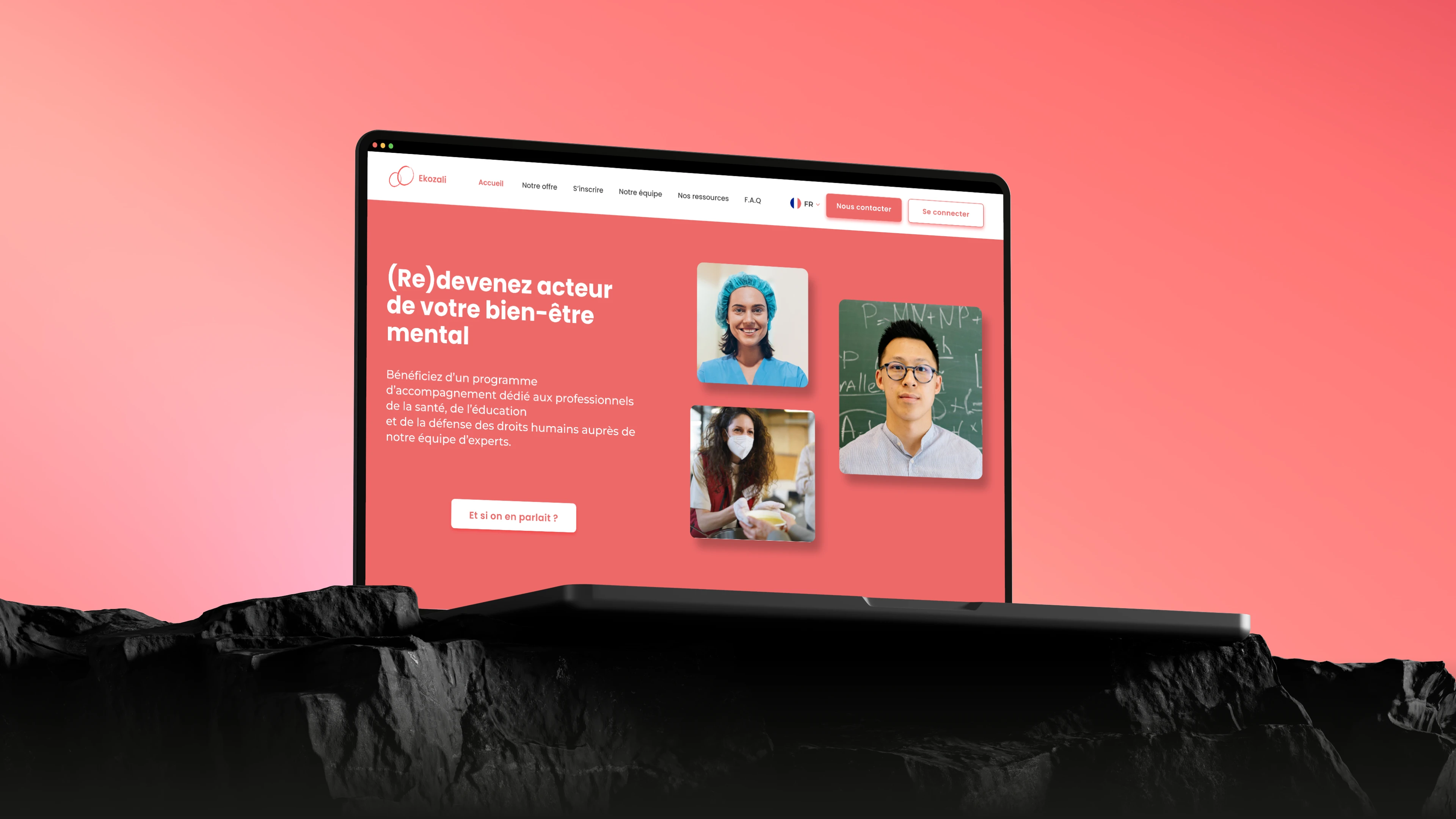
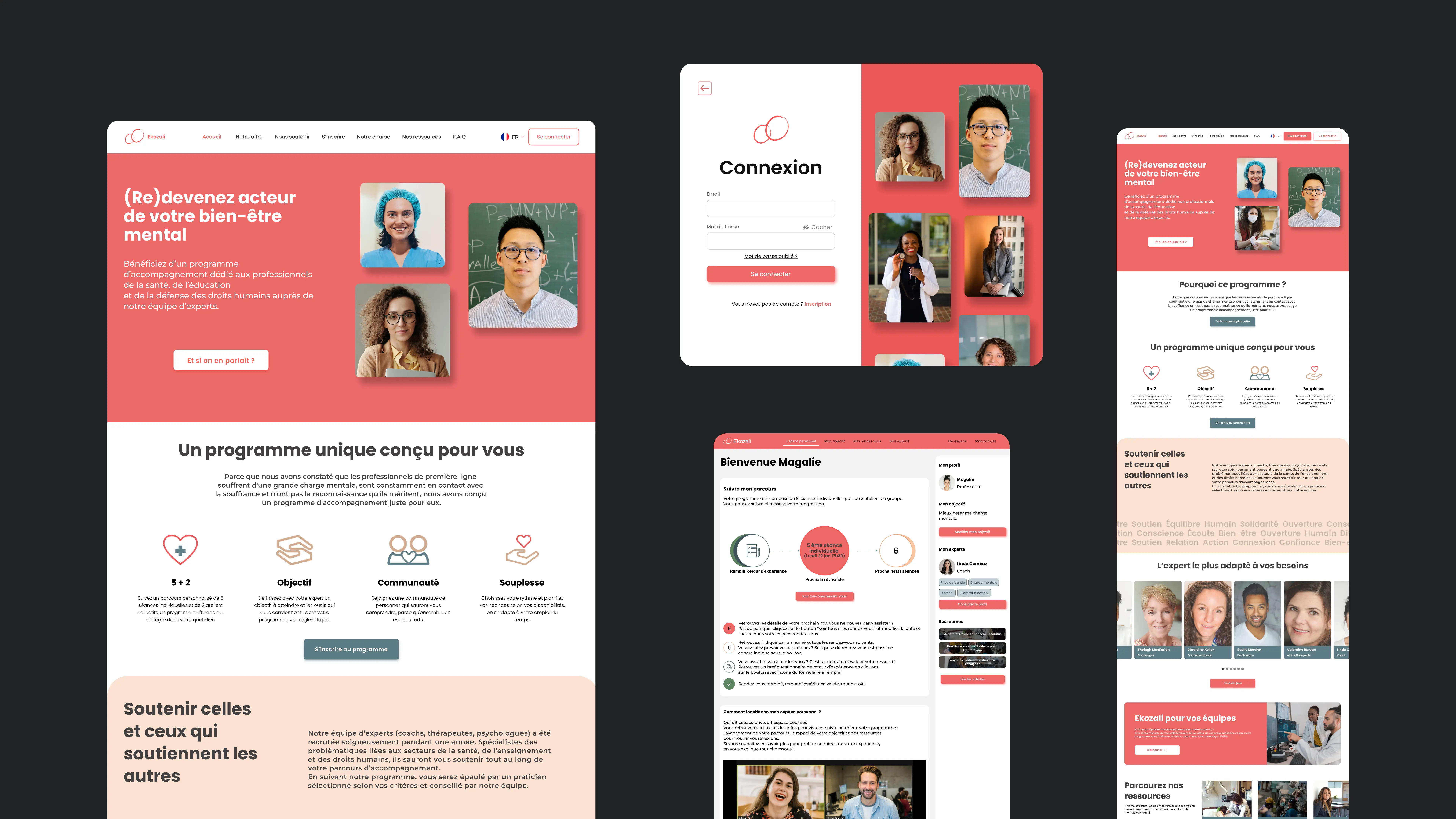
EKOZALI is a foundation dedicated to supporting and raising awareness around mental health for frontline workers, including professionals in healthcare, humanitarian aid, and education.
As part of the launch of a new expert-led support program, the foundation needed to better understand the needs, expectations, and motivations of its future beneficiaries.
To support this initiative, qualitative and quantitative UX research was conducted to identify key personas and help shape the program’s content, communication, and access experience, with the goal of fostering engagement and a sense of community.

PROBLEM STATEMENT
Without a clear understanding of beneficiaries’ needs, behaviors, and engagement drivers, a mental health support program risks being misaligned with real expectations.
This can limit adoption, weaken long-term engagement, and reduce the perceived value of the program, highlighting the need for research-driven insights to design a relevant, accessible, and sustainable support experience.
RESEARCH GOALS
PERSONA & METRICS
Frustrations
Based on
KEY INSIGHTS & DECISIONS
HOW I APPROACHED THIS PROJECT
DURATION
3 Months
Limits
CASE STUDY - SOLUTION
Deliverable
Expected Outcome
IMPACT & RESULTS
Observed User Impact
Expected Product Impact
Key Metrics